

Last Updated on June 28, 2026 by Eric B. Steele
Packing your hiking backpack the right way can make all the difference between a comfortable trek and a tiring struggle. If you’ve ever felt your pack pulling you backward or found yourself digging through everything just to grab one small item, you’re not alone.
But what if there was a simple, clear way to organize your gear so that everything fits perfectly and is easy to access? In this post, you’ll discover exactly how to pack a hiking backpack using a straightforward diagram. By following this guide, you’ll save energy, stay balanced, and enjoy your hike more than ever.
Keep reading, and you’ll learn the secrets to packing like a pro—no guesswork needed.
Credit: www.nemoequipment.com
Choosing The Right Backpack
Packing a hiking backpack starts with picking the right one. A good backpack fits well and carries your gear comfortably.
Think about the type of hiking and the gear you need. This helps you select the best backpack for your trip.
Types Of Hiking Backpacks
There are different backpacks for different hikes. Each type suits a certain style and length of trip.
- Daypacks: Small bags for short hikes and light loads.
- Overnight Backpacks: Medium size for one or two nights.
- Multi-day Backpacks: Larger bags for trips lasting several days.
- Technical Backpacks: Designed for climbing or specialized activities.
Capacity And Fit
Capacity is how much space the backpack offers, measured in liters. Fit is about how well the pack matches your body.
| Backpack Size | Capacity (Liters) | Best For |
| Small | 15-30 | Day hikes |
| Medium | 30-50 | Overnight trips |
| Large | 50-70+ | Multi-day hikes |
Check the shoulder straps, hip belt, and back length to find a good fit. A well-fitted pack reduces pain and strain.
Essential Features To Look For
Some features make a backpack easier to use and carry. Look for these when choosing your pack.
- Adjustable straps for a custom fit.
- Hip belt to support weight on your hips.
- Multiple compartments for organized packing.
- Hydration reservoir sleeve or pockets.
- Durable and water-resistant materials.
- Compression straps to stabilize the load.

Credit: www.amazon.in
Packing Essentials And Layout
Packing a hiking backpack the right way is crucial for comfort and balance. Knowing where to place your gear helps in accessing items easily and distributing weight efficiently.
This guide will explore the essentials of packing your backpack, focusing on core gear placement, organizing clothing and food, and distributing weight evenly.
Core Gear Placement
Core gear should be placed strategically to maintain balance and ease of access. Heavier items should be centered and closest to your back.
- Place sleeping bag at the bottom.
- Pack tent and cooking gear in the middle.
- Keep water and quick-access items on top.
Organizing Clothing And Food
Organizing your clothing and food requires a smart approach to ensure quick access and protection from the elements. Packing cubes or stuff sacks can be helpful.
| Clothing Item | Placement |
| Jacket | Top for easy access |
| Extra layers | Middle or sides |
| Food | In bear-proof containers |
Distributing Weight Evenly
Proper weight distribution is key to avoiding strain and injury. Aim to keep the heaviest items close to your back and balanced from side to side.
Consider the 80-20 rule: 80% of the weight should be on your hips, and 20% on your shoulders.
Using A Packing Diagram
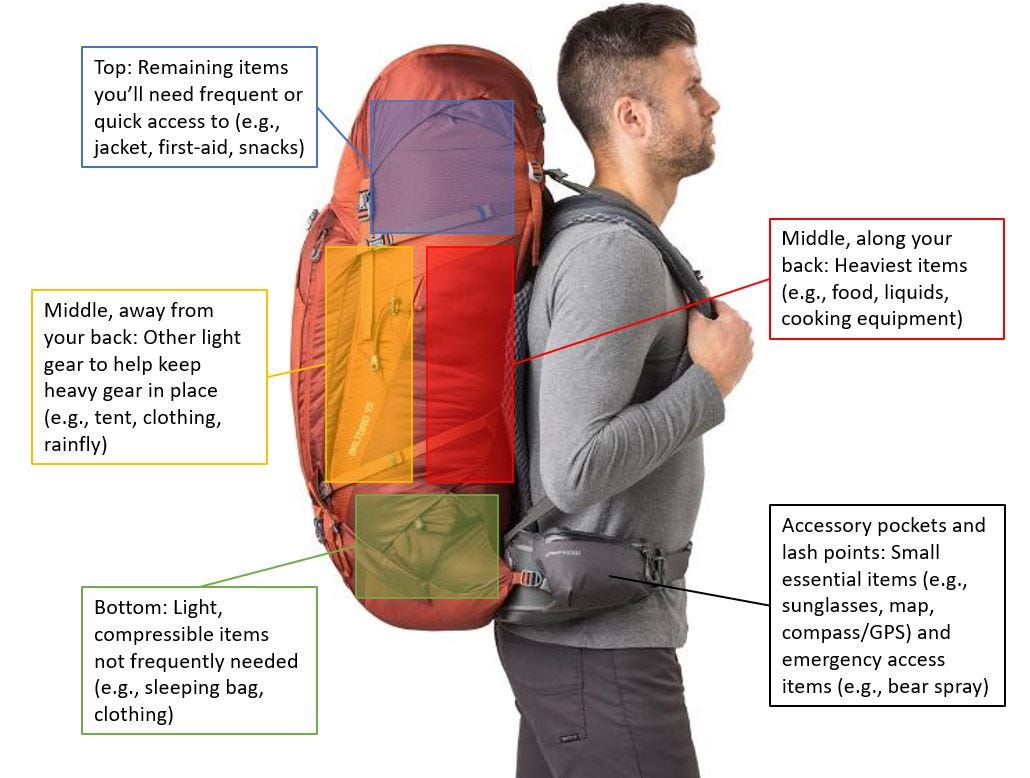
Packing a hiking backpack can be easier with a clear diagram. It shows where to place each item for balance and access.
A packing diagram helps organize gear by zones. It saves space and keeps the backpack comfortable to carry.
Visual Guide To Backpack Zones
The backpack divides into zones. Each zone holds certain types of gear to keep the load stable.
| Zone | Contents | Reason |
|---|---|---|
| Bottom | Sleeping bag, light clothes | Keeps heavy items higher for balance |
| Middle (close to back) | Heavy items like food, stove | Maintains center of gravity near your back |
| Top | Light, bulky items like jacket | Easier access during the day |
| Outside pockets | Water bottles, map, snacks | Items you need often |
Tips For Efficient Packing
Good packing saves space and weight. It also helps you find things quickly on the trail.
- Put heavy gear close to your back and center
- Use stuff sacks to compress clothes and gear
- Keep frequently used items in outside pockets
- Distribute weight evenly between left and right sides
- Fill small gaps with socks or soft items
Common Packing Mistakes
Many hikers pack without a plan. This causes discomfort and wasted space.
- Putting heavy items at the bottom makes the pack unstable
- Overloading one side causes back pain
- Storing frequently used items deep inside wastes time
- Ignoring weather gear makes you unprepared
- Packing items loose causes noise and damage
Credit: pangolinswithpacks.com
Additional Packing Tips
Packing a hiking backpack well makes your trip easier. Good packing keeps your gear safe and easy to reach.
These tips help you pack smart. They focus on protecting your items and keeping your backpack balanced.
Waterproofing And Protection
Keep your gear dry by using waterproof bags or liners. Put electronics and clothes inside dry sacks or plastic bags.
Cover your backpack with a rain cover if rain is expected. Pack heavy items at the bottom to protect lighter items.
- Use dry sacks or zip-lock bags inside your backpack
- Carry a rain cover for sudden weather changes
- Wrap fragile gear in clothes or padded materials
- Seal food tightly to avoid spills and smells
Adjusting For Trip Length
Pack more clothes and food for longer trips. For short trips, carry only essentials to save weight.
Plan meals and water needs based on how many days you will hike. Adjust your gear list as trip length changes.
- One day trip: light pack with snacks and water
- Weekend trip: extra clothes and more food
- Week-long trip: full camping gear and supplies
Balancing Comfort And Accessibility
Pack items you use often where you can reach them easily. Keep heavy items close to your back for comfort.
Balance weight evenly on both sides. Use side pockets for water bottles or small tools you need fast.
- Place heavy gear near your spine and center of gravity
- Store snacks, maps, and first aid in top or side pockets
- Keep sleeping bag at the bottom of the pack
- Adjust straps to fit your body well and avoid pain
Frequently Asked Questions
How Do I Organize Items In A Hiking Backpack?
Pack heavy items close to your back and center for balance. Light items go on top or outside.
What Should Go At The Bottom Of A Hiking Backpack?
Place sleeping bags and light, bulky gear at the bottom to keep weight low and stable.
How Can I Keep My Backpack Balanced While Hiking?
Distribute weight evenly on both sides. Avoid putting all heavy items on one side.
Where Do I Put Food And Water In A Hiking Backpack?
Keep food and water in easy-to-reach pockets or near the top for quick access.
How Do I Protect Fragile Items Inside My Backpack?
Wrap fragile gear in soft clothes and place them in the middle for cushioning.
What Is The Best Way To Pack Clothes For Hiking?
Roll clothes tightly to save space and pack them near the top or sides for easy reach.
Conclusion
Packing a hiking backpack takes some planning and care. Use the diagram to place heavy items close to your back. Keep essentials easy to reach. Balance weight evenly on both sides. This helps you walk comfortably and avoid pain. Practice packing a few times before your trip.
With good packing, your hike will feel easier and more fun. Remember, simple steps make a big difference. Enjoy your adventure with a well-packed backpack!