

Last Updated on June 28, 2026 by Eric B. Steele
Are you tired of guessing whether your suitcase will fit airline size rules? Knowing how to measure a suitcase in linear inches can save you from extra fees and last-minute packing stress.
It’s simpler than you think, and once you learn this quick trick, you’ll pack smarter and travel with confidence. Keep reading to discover the easy steps you can use every time you prepare for a trip. Your wallet and peace of mind will thank you!
What Are Linear Inches?
Linear inches measure the total size of a suitcase. Airlines use this to check baggage limits.
It adds the length, width, and height of your suitcase. This helps to see if it fits airline rules.
How To Calculate Linear Inches
Measure your suitcase’s three main sides. These are length, width, and height.
- Measure the longest side (length).
- Measure the side from front to back (width).
- Measure the height from bottom to top.
- Add all three numbers together.
Why Linear Inches Matter
Airlines set size limits using linear inches. If your bag is too big, you may pay fees.
Knowing linear inches saves time at the airport. You can avoid surprises before boarding.
Example Of Linear Inches Calculation
| Dimension | Size (inches) |
| Length | 22 |
| Width | 14 |
| Height | 9 |
| Total Linear Inches | 45 |

Credit: homestylish.us
Tools Needed For Measurement
Measuring a suitcase in linear inches is simple. You only need a few tools to get it right.
These tools help you measure the length, width, and height of your suitcase. Let’s explore what you need.
Measuring Tape
A measuring tape is essential for accurate measurements. It is flexible and easy to use.
- Choose a tape that is at least 60 inches long.
- Ensure it has clear markings for precision.
- Opt for a tape with both inches and centimeters.
Notepad And Pen
Use a notepad and pen to jot down your measurements. This helps in keeping track of each dimension.
Calculator
A calculator aids in adding the dimensions for linear inches. This ensures accuracy in your total measurement.
For a quick calculation: Linear Inches = Length + Width + Height
Flat Surface
A flat surface is needed to lay the suitcase for measurement. It helps in getting straight lines and accurate readings.
| Tool | Purpose |
| Measuring Tape | Measure dimensions |
| Notepad and Pen | Record measurements |
| Calculator | Calculate linear inches |
| Flat Surface | Ensure accuracy |
Measuring Length, Width, And Height
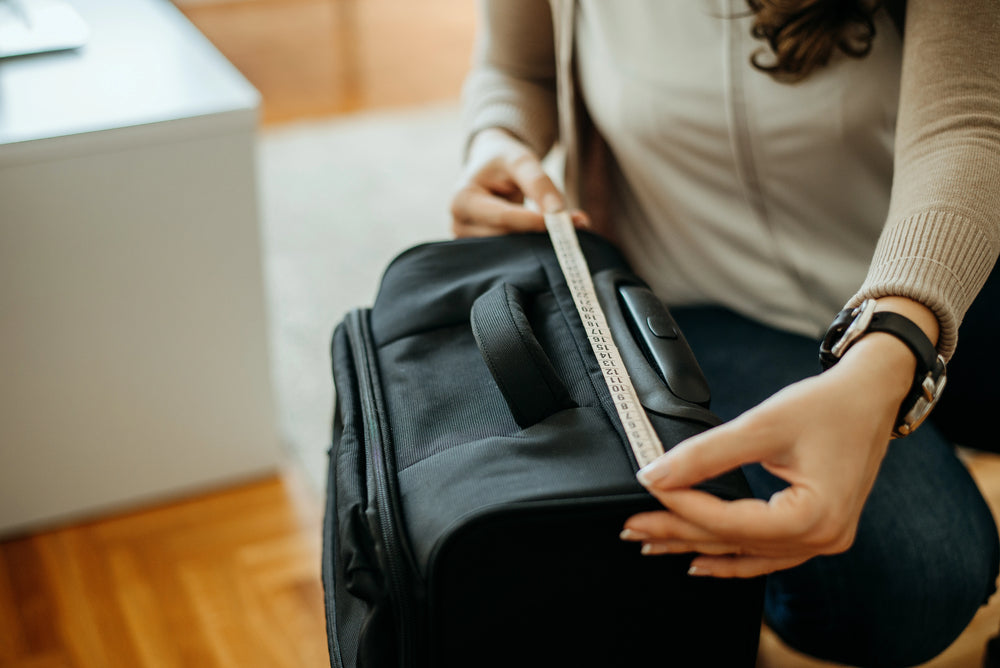
Measuring a suitcase in linear inches helps you know its total size. Airlines use linear inches to set baggage limits. You measure length, width, and height and add them together.
Use a tape measure or ruler for accuracy. Measure the suitcase in its normal shape, including handles and wheels.
Measuring Length
Length is the longest side of the suitcase. Place the suitcase on a flat surface. Measure from one end to the other along the longest edge.
Include any parts that stick out, like handles or pockets. Record the measurement in inches.
Measuring Width
Width is the side across from left to right. Measure the suitcase from one side to the other, at the widest point. Keep the tape measure straight and level.
Include any bulges or pockets that add to the width. Write down the width in inches.
Measuring Height
Height is the distance from bottom to top. Stand the suitcase upright. Measure from the bottom surface to the highest point on top.
Include wheels, handles, or other parts that add height. Note this number in inches as well.
| Dimension | How to Measure | Include |
|---|---|---|
| Length | Longest side, flat surface | Handles, pockets |
| Width | Side to side, widest point | Bulges, pockets |
| Height | Bottom to top, upright | Wheels, handles |
Credit: unluggage.com
Calculating Total Linear Inches
Measuring a suitcase in linear inches helps you follow airline size rules. Linear inches are the sum of length, width, and height.
This measurement shows the total size of your suitcase. It helps avoid extra fees or luggage problems.
Measure The Length
Length is the longest part of the suitcase. Use a tape measure from one end to the other.
Include wheels and handles if they do not move or retract.
Measure The Width
Width is the side-to-side distance of the suitcase. Measure the widest part across the front.
Do not include extra pockets or straps that stick out.
Measure The Height
Height is the distance from the bottom to the top of the suitcase. Include any fixed handles or parts.
Make sure the suitcase is standing upright for an accurate height measurement.
Add Length, Width, And Height
Add the three measurements in inches: length, width, and height. The total is the linear inches.
This total helps you check if the suitcase meets airline size limits.
- Length: measure the longest side
- Width: measure the widest side
- Height: measure the tallest side
- Total linear inches = Length + Width + Height

Credit: www.youtube.com
Frequently Asked Questions
What Does Measuring A Suitcase In Linear Inches Mean?
It means adding the suitcase’s length, width, and height together.
How Do I Measure A Suitcase’s Length Correctly?
Measure the longest side from one end to the other.
Why Is Measuring In Linear Inches Important For Travel?
Airlines use linear inches to set size limits for carry-on and checked bags.
Should I Include Wheels When Measuring My Suitcase?
Yes, include wheels and handles for an accurate total size.
Can I Use A Tape Measure To Find Linear Inches?
Yes, a tape measure is the best tool for precise suitcase dimensions.
What If My Suitcase Exceeds The Airline’s Linear Inch Limit?
You may pay extra fees or need to choose a smaller bag.
Conclusion
Measuring a suitcase in linear inches is simple and useful. Add the length, width, and height of the suitcase. This total helps you follow airline rules and avoid extra fees. Always measure the suitcase with wheels and handles included. Double-check your measurements before packing.
Knowing this skill saves time and stress at the airport. Keep your trips smooth and hassle-free by measuring right every time. Easy to do, and it makes travel better.