

Last Updated on July 4, 2026 by Eric B. Steele
Have you ever faced the frustrating moment when your key gets stuck inside a lock? It can disrupt your day and leave you feeling stuck—literally.
But don’t worry, you’re not alone, and there are simple steps you can take right now to free that jammed key without causing damage. You’ll discover easy, practical tips that anyone can follow to get your key out quickly and safely.
Keep reading—you’ll be surprised how quickly you can solve this common problem and get back on track.

Credit: www.reddit.com
Common Causes Of Jammed Keys
Jammed keys in locks can stop you from opening doors easily. Knowing the causes helps fix the problem fast.
Many factors can lead to a key getting stuck. Some are simple to solve, while others may need more care.
Worn Out Keys Or Locks
Keys and locks wear down after much use. The metal can become soft or bent, causing the key to jam inside the lock.
Dirt And Debris Inside The Lock
Dust, sand, or small particles can get inside the lock. These block the key’s smooth movement and cause it to stick.
Rust And Corrosion
Locks exposed to moisture may rust inside. Rust makes the lock parts swell and the key hard to turn or remove.
Incorrect Key Use
- Using the wrong key for the lock
- Forcing the key in or turning it too hard
- Using keys that are bent or damaged
These actions damage the lock or key, which can cause the key to jam inside.
Lock Mechanism Damage
| Type of Damage | Effect on Lock |
|---|---|
| Broken pins inside | Key cannot move smoothly |
| Misaligned parts | Key gets stuck or won’t turn |
| Internal spring failure | Lock jams and traps the key |

Credit: www.reddit.com
Tools Needed For Removal
A jammed key can be frustrating. Using the right tools helps remove it safely.
Ensure you have a gentle touch and some patience. These tools will assist in the process.
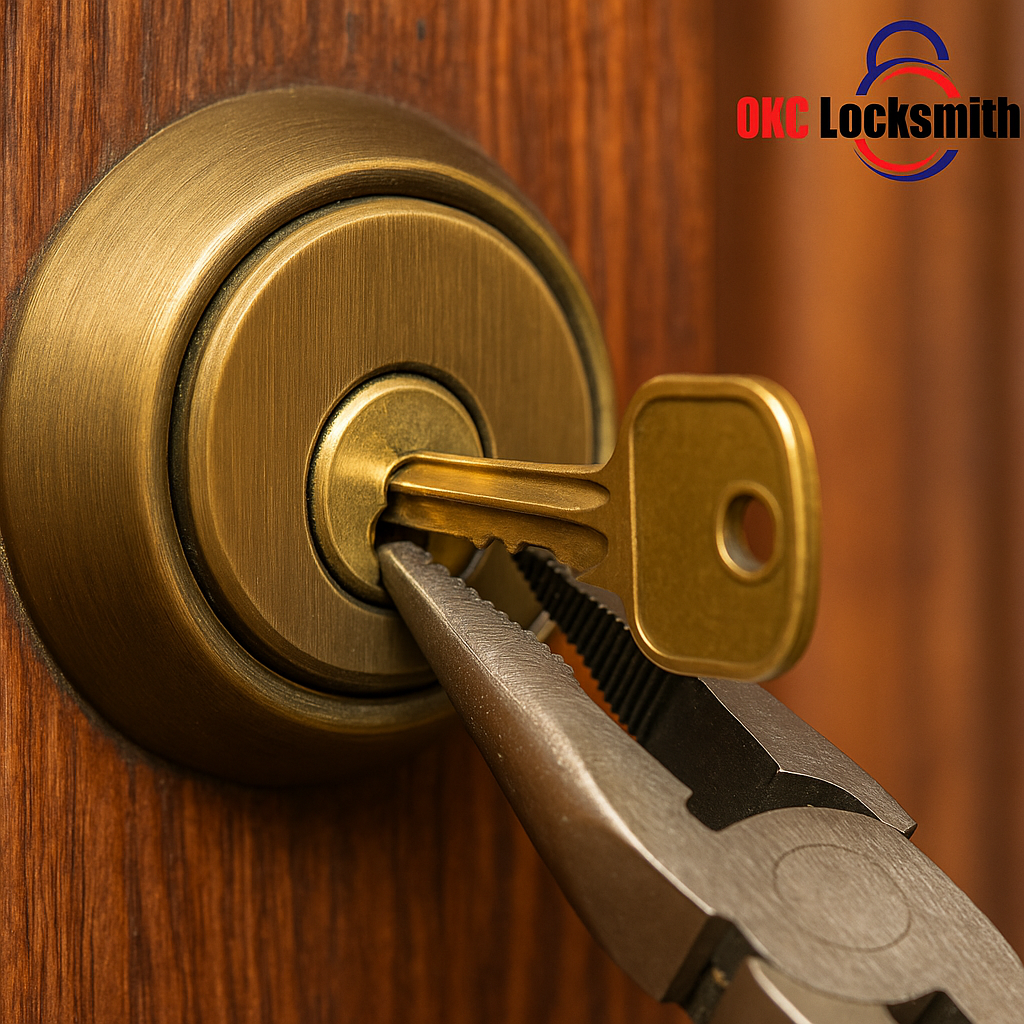
Needle-nose Pliers
Needle-nose pliers help grip the key. They are useful for pulling it out gently.
Use them carefully to avoid breaking the key. Apply slow and steady pressure.
Lubricant Spray
Lubricant spray reduces friction inside the lock. It makes key removal easier.
Spray a small amount into the lock. Wait a few minutes before attempting removal.
Tweezers
Tweezers can assist when pliers are too large. They are ideal for smaller keys.
Grip the key firmly with tweezers. Pull it out with a gentle motion.
Flathead Screwdriver
A flathead screwdriver can help if the key is stuck deep. It helps to wiggle the key free.
Insert it carefully next to the key. Use it to leverage the key out slowly.
Key Extractor Tool
A key extractor tool is designed for this task. It hooks onto the key to pull it out.
Slide it carefully into the lock. Use it to remove the key without force.
Patience And Care
Patience is your best tool. Rushing can break the key, worsening the problem.
Take your time to avoid damage. Gentle movements are key to success.
Step-by-step Diy Removal Methods
A jammed key in a lock can stop you from entering your home or car. Fixing it yourself saves time and money.
Use these simple methods carefully to remove the stuck key without damage.
Lubricate The Lock
Apply a lubricant like graphite powder or WD-40 to the keyhole. This reduces friction inside the lock.
Spray a small amount directly into the keyhole. Wait a few minutes to let it work.
Gently Wiggle The Key
Hold the key and wiggle it back and forth slowly. Do not force it hard to avoid breaking.
- Grip the key firmly but gently.
- Move the key slightly left and right.
- Try pulling it out while wiggling.
- Repeat until the key moves freely.
Use Tweezers Or Pliers
If part of the key is sticking out, use tweezers or needle-nose pliers to pull it out carefully.
Do not squeeze too hard or you may break the key inside the lock.
Apply Compressed Air
Use canned compressed air to blow dust or dirt out of the lock. This can free a stuck key.
| Tool | Purpose |
|---|---|
| Graphite Powder | Lubricates lock without making it sticky |
| WD-40 | Reduces friction and loosens stuck parts |
| Tweezers | Grips and pulls the key carefully |
| Needle-Nose Pliers | Helps remove key if tweezers cannot hold |
| Compressed Air | Clears dust and debris inside the lock |
Credit: okclocksmith.com
Preventing Future Key Jams
A jammed key in a lock can cause frustration and damage. Preventing jams saves time and money. Simple care helps keep your lock working smoothly.
Follow these tips to avoid key jams in the future. Proper maintenance and careful use extend the life of your lock and key.
Keep Your Key Clean
Dirt and debris on your key can enter the lock and cause jams. Clean your key regularly with a soft cloth.
A clean key slides in and out smoothly without sticking.
Lubricate The Lock
Use a graphite or silicone-based lubricant for your lock. Avoid oil-based products that attract dirt and dust.
Apply a small amount of lubricant inside the keyhole every few months. This keeps the lock parts moving freely.
Use The Correct Key
Always use the right key for your lock. Forcing the wrong key can bend or break it inside the lock.
Check your keys for wear and replace damaged ones to prevent jams.
Handle Your Key Gently
Do not use your key as a tool to pry or twist hard. Gentle use protects the key and lock mechanism.
Pull the key straight out after turning. Wiggling or forcing the key can cause it to jam.
Regularly Inspect Your Lock
Check your lock for signs of damage or dirt build-up. Early detection helps avoid key jams.
- Look for rust or dirt inside the keyhole
- Test the key for smooth turning
- Call a locksmith for repairs if needed
Frequently Asked Questions
How Can I Safely Remove A Jammed Key From A Lock?
Apply graphite powder or lubricant gently, then wiggle the key slowly to free it.
What Household Items Help Get A Stuck Key Out?
Use a small amount of soap, WD-40, or cooking oil to loosen the key.
Should I Force A Jammed Key To Remove It?
No. Forcing can break the key or damage the lock.
Can Cold Or Heat Fix A Jammed Key Problem?
Cold or heat can help slightly expand or contract the lock, easing key removal.
When Is It Best To Call A Locksmith For A Jammed Key?
Call a locksmith if the key won’t move after gentle attempts or if it breaks inside.
Conclusion
Dealing with a jammed key can feel frustrating and stressful. Stay calm and try gentle movements first. Use some lubricant to ease the key’s movement. Avoid forcing the key to prevent damage. If these steps do not work, consider calling a professional locksmith.
Taking care of your lock helps prevent future jams. Small efforts now save big troubles later. Keep these tips handy for quick action next time. Your patience and care will help solve the problem safely.